Once upon a time, on the vast plains of the African savanna, a Kenyan boy named Kambili grew up on the wildlife stories his father told him every night.
Kambili’s father was a safari guide. One day his father fell ill and sent Kambili to lead a small group of guests across the savanna instead.
Among the group was a Japanese girl named Hana, who carried a camera and ran toward every animal she saw.
“Stop,” Kambili said, quiet but firm, as Hana ran toward a herd of elephants. “Don’t get close to a mother elephant with a calf. She’ll attack to protect her baby.”
Hana stopped and looked at Kambili, confused.
“But I wanted a close-up photo.”
“Safari isn’t about photos,” Kambili said, leading her back a safe distance. “It’s about watching without disturbing.”
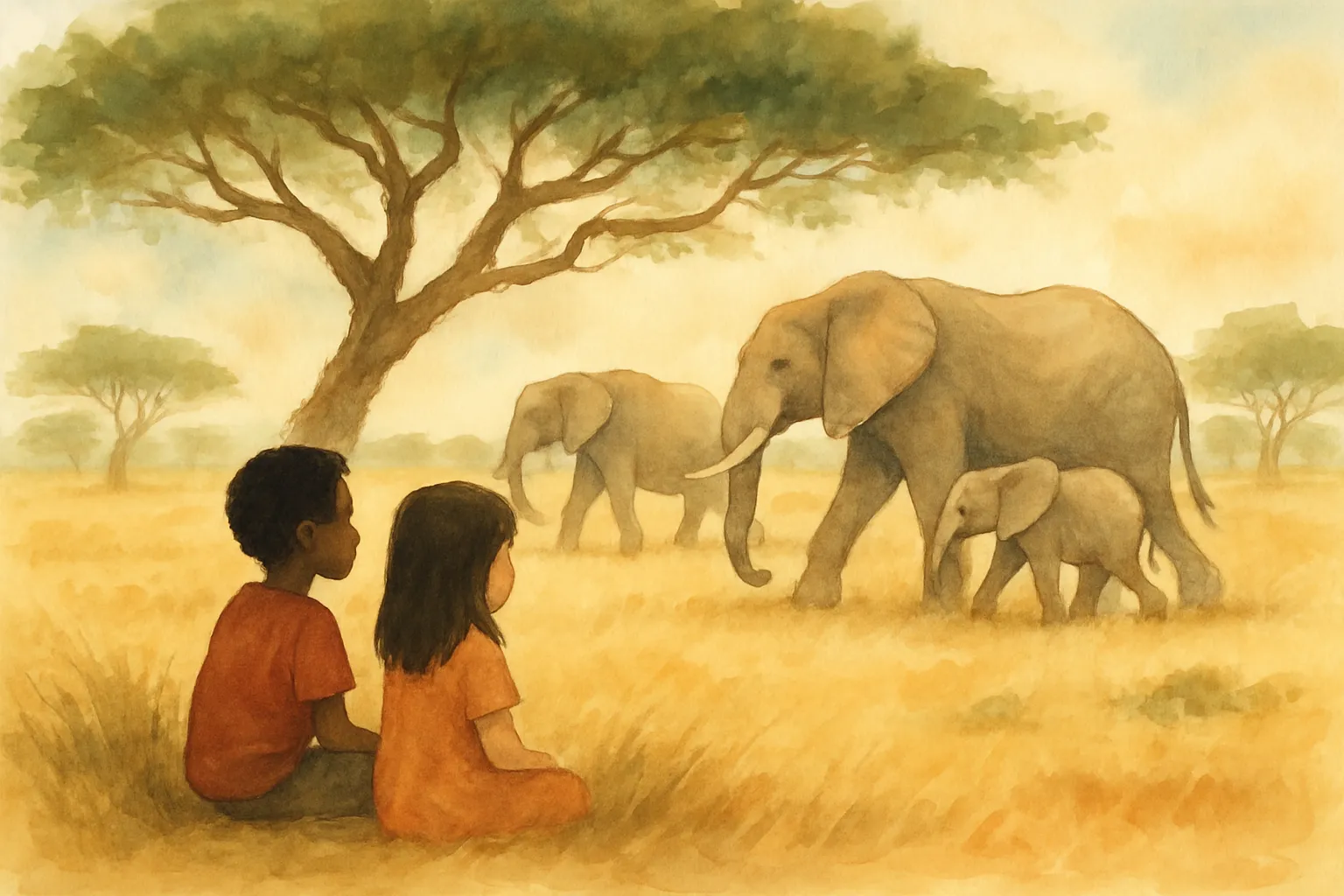
He had Hana sit quietly beneath an acacia tree. Before long, the herd of elephants passed by within twenty meters — a baby elephant toddling after its mother, ears flapping in the breeze.
Hana forgot to press the shutter.
She simply sat, watched, and breathed.
“This,” Kambili whispered, “is what a real safari is.”
Back at camp, Hana walked over to Kambili. “Thank you for teaching me. The best picture I got today was the one in my heart, not in my camera.”
Kambili smiled. That was exactly what his father had always taught him — that wildlife wasn’t a show for people. They were fellow creatures of the earth, deserving of respect.
Moral: Respecting nature and all living things is essential. We are only visitors in their home. Watching and appreciating without disturbing is the best way to coexist with nature.