Once upon a time, in a small town in India, Holi arrived along with joy and excitement for every child.
Every child except Arjun.
He stood watching his friends throw colored powder at each other from his window, refusing to go down and join.
“The color will stain my clothes,” he told himself. But the truth ran deeper — he had argued with his old friend Ravi a month ago, and he didn’t know how to fix it.
Ravi walked over and stopped beneath the window, looking up, a bag of pink powder in his hand.
“Arjun!” Ravi called out. “Come play?”
Arjun didn’t answer.
Ravi tossed the bag of powder up. Pink dust burst across the window, staining Arjun’s shirt and the curtains.
Arjun was furious and jumped down from the house — but when he saw Ravi standing there smiling, his anger slowly faded.
“I’m sorry for our fight,” Ravi said. “Holi is the day we wash away grudges and start fresh with color.”
Arjun looked down at the pink powder on his shirt, then picked up a bag of his own.
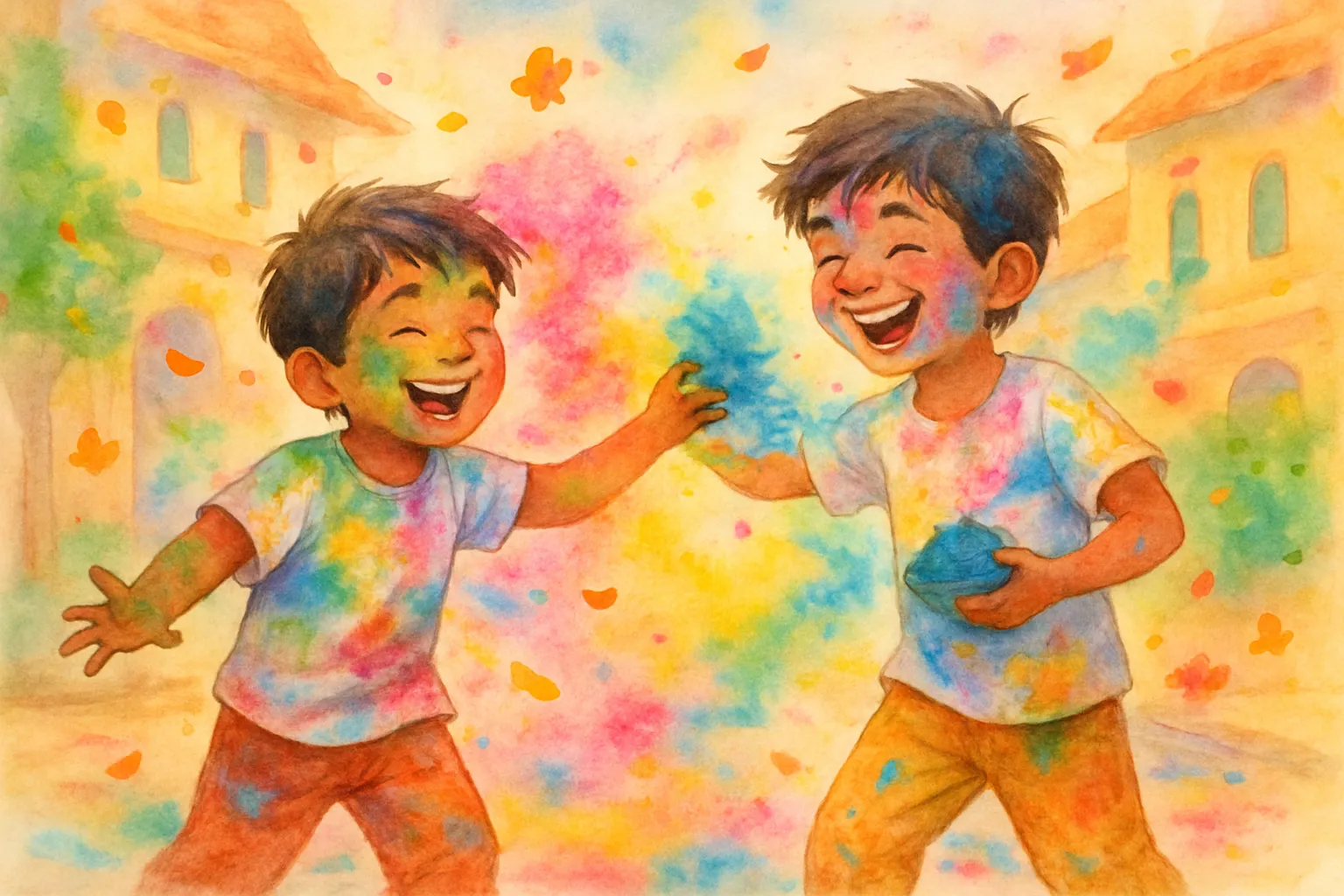
The two of them threw color at each other until they were soaked from head to toe, laughing so hard they could barely breathe.
That evening, Arjun went home covered in every color imaginable, feeling lighter than he had in an entire month.
He finally understood that Holi wasn’t just about color — it was a tradition that taught people to let go, make peace, and begin again with brightness.
Moral: The Indian festival of Holi teaches us to let go of anger and resentment, just like the colored powder that’s thrown and then washed away. Good relationships also need forgiveness and fresh starts every now and then.